



Introduction: Men’s Hormone Optimization Is About More Than Testosterone
For many men, the first sign that something feels off is not dramatic. It may start as lower energy, slower workout recovery, reduced sex drive, more stubborn body fat, weaker motivation, or the feeling that they are not performing at the same level they used to. At first, these changes are easy to blame on stress, age, work, poor sleep, or a busy schedule.
Sometimes those factors are part of the problem. But sometimes, hormones may also be involved.
Men’s hormone optimization is the process of understanding how key hormones and related biomarkers influence energy, libido, strength, recovery, mood, metabolism, performance, and long-term vitality. Testosterone is usually the hormone men think about first, but it is only one part of the picture.
A complete hormone optimization approach may also look at free testosterone, SHBG, estradiol, thyroid-related markers, metabolic health, blood counts, liver markers, and other indicators that help explain how the body is functioning.
This is where many men make a mistake. They assume hormone optimization means simply “getting on testosterone.” In reality, responsible hormone optimization starts with questions, symptoms, health history, bloodwork, and provider review. Testosterone therapy may be appropriate for some qualified patients, but it should not be treated like a shortcut, a gym supplement, or a one-size-fits-all solution.
Professional guidelines emphasize that testosterone deficiency should be diagnosed only when men have symptoms consistent with low testosterone along with consistently low measured testosterone levels. That means symptoms matter, but bloodwork matters too.
At Gatlan, the goal is not to chase the highest testosterone number possible. The goal is to help men better understand what their body is showing and build a personalized plan around their symptoms, goals, labs, and long-term health. Gatlan’s men’s treatment path includes clinical intake and labs, physician-guided protocols, and concierge delivery and monitoring, with a focus on hormones, metabolic health, recovery, and personal goals.
For qualified patients, that plan may include Kyzatrex Oral Testosterone Pills, Testosterone Compounded Injection, lifestyle support, metabolic health review, medical weight loss options, longevity protocols, or other personalized recommendations when appropriate.
This guide is designed to help men understand the full picture: what hormone optimization means, why testosterone matters, what symptoms may suggest a hormone issue, which blood tests are important, what treatment options exist, and how to approach the process safely.
What Is Men’s Hormone Optimization?
Men’s hormone optimization is a personalized approach to evaluating and supporting hormones that affect how men feel, perform, recover, and age. It is not just about testosterone replacement therapy. It is about understanding whether hormones are balanced, whether symptoms match lab results, and whether treatment may help improve quality of life.
Hormones act like internal messengers. They influence many of the systems men care about most, including:
- Energy
- Sex drive
- Mood
- Motivation
- Strength
- Muscle mass
- Fat distribution
- Sleep
- Recovery
- Cognitive clarity
- Metabolism
- Long-term vitality
Testosterone plays a major role in male health. It helps support muscle strength and mass, bone density, fat distribution, red blood cell production, sex drive, and sperm production. But testosterone does not work alone. It interacts with other hormones, proteins, and health markers that can affect how much testosterone is available and how the body responds.
For example, a man may have a total testosterone number that looks acceptable, but his free testosterone may be lower than expected. Another man may have symptoms that seem hormone-related, but his labs may suggest sleep, metabolic health, thyroid function, stress, or medication side effects should also be evaluated.
That is why a complete hormone optimization plan should not begin with a prescription. It should begin with a deeper look at the person.
Why Men Start Looking Into Hormone Optimization
Most men do not search for hormone optimization because they are curious about lab values. They search because something in daily life feels different.
Common reasons men start exploring hormone testing or testosterone optimization include:
- They feel tired even after sleeping.
- They have less interest in sex.
- They are losing strength or muscle.
- They are gaining belly fat more easily.
- They feel less motivated or driven.
- They are recovering slower from workouts.
- They feel mentally foggy.
- They feel older than they should.
- They are not seeing results from training and nutrition.
- They want to be proactive about aging.
These symptoms can be frustrating because they are often vague. A man may know he does not feel right, but he may not know why. Low testosterone can contribute to some of these concerns, but it is not the only possible explanation. Symptoms commonly associated with low testosterone can also be caused by other factors, including medication side effects, obstructive sleep apnea, thyroid problems, diabetes, and depression.
This is why Gatlan’s approach is built around clarity. Instead of assuming every symptom is testosterone-related, Gatlan helps patients evaluate symptoms, biomarkers, goals, and health history before creating a plan.

Hormone Optimization vs. Testosterone Replacement Therapy
Hormone optimization and testosterone replacement therapy are related, but they are not the same thing.
Hormone optimization is the broader process. It may include blood testing, lifestyle evaluation, metabolic health review, sleep and recovery support, symptom tracking, provider consultation, and treatment planning.
Testosterone replacement therapy, or TRT, is one possible treatment within hormone optimization. TRT may be considered for qualified men who have symptoms of testosterone deficiency and consistently low testosterone levels. The Endocrine Society recommends testosterone therapy for men with hypogonadism to correct symptoms of testosterone deficiency, while also emphasizing proper diagnosis and monitoring.
This distinction matters because not every man who feels tired needs TRT. Not every man with low libido has low testosterone. Not every man who wants to build muscle should be placed on testosterone therapy.
A responsible hormone optimization process asks better questions first:
- Are symptoms consistent with low testosterone?
- Are testosterone levels consistently low?
- Is free testosterone also low or limited by SHBG?
- Are estradiol, hematocrit, liver enzymes, or PSA relevant?
- Are sleep, stress, medications, or metabolic health contributing?
- Would lifestyle changes, medical weight loss, longevity support, or TRT be most appropriate?
This is the difference between guessing and optimizing.
The Key Symptoms of Low Testosterone in Men
Low testosterone can show up in different ways. Some men notice sexual health changes first. Others notice energy, mood, strength, or body composition changes before they ever think about libido. The important thing to understand is that testosterone affects multiple systems, which is why symptoms can feel broad and sometimes hard to explain.
Common symptoms that may be associated with low testosterone include:
- Low libido
- Reduced energy
- Erectile changes
- Lower motivation
- Slower workout recovery
- Difficulty building or maintaining muscle
- Increased body fat
- Mood changes
- Brain fog
- Lower confidence
- Poor sleep or feeling unrested
- Reduced strength or performance
Male hypogonadism can be associated with symptoms such as less desire for sex, less energy, reduced muscle mass, and reduced bone mass.
That said, symptoms alone are not enough to diagnose low testosterone. Fatigue, weight gain, low libido, mood changes, and poor recovery can also be connected to sleep problems, stress, depression, medications, thyroid issues, blood sugar changes, alcohol use, or other health concerns.
This is one of the most important points in men’s hormone optimization: symptoms tell you when to investigate, but bloodwork helps show what is actually happening.
Low Libido and Sexual Health
Low libido is one of the most common reasons men start researching testosterone. A change in sex drive can affect confidence, relationships, mood, and overall quality of life. For some men, the change is gradual. For others, it feels sudden and frustrating.
Testosterone plays a major role in male sexual desire. When testosterone levels are low, some men may experience reduced libido, fewer spontaneous erections, or less sexual confidence.
However, libido is not controlled by testosterone alone. Sexual desire can also be affected by:
- Stress
- Sleep quality
- Relationship factors
- Depression or anxiety
- Alcohol use
- Certain medications
- Body image
- Erectile dysfunction
- Metabolic health
This is why a man with low libido should not automatically assume he needs TRT. He may need hormone testing. He may need better sleep. He may need metabolic health support. He may need a provider to review medications or other factors.
Gatlan’s hormone optimization process helps men sort through those possibilities with a provider-guided approach.
Energy, Motivation, and Mental Clarity
Many men describe low testosterone as feeling like they have lost their edge. They may still be functioning, working, training, and taking care of responsibilities, but everything feels harder than it used to.
They may say things like:
- “I feel tired even when I sleep.”
- “I do not have the same drive.”
- “I feel foggy.”
- “I am not recovering like I used to.”
- “I just do not feel like myself.”
Testosterone may influence energy, motivation, mood, and cognitive sharpness, but these symptoms overlap with many other health issues. Poor sleep, chronic stress, under-eating, overtraining, depression, low thyroid function, and blood sugar problems can create similar symptoms.
That is why a complete hormone optimization guide should not frame testosterone as the only answer. Instead, it should help men understand that testosterone is one possible part of a bigger system.
At Gatlan, bloodwork and provider review can help evaluate whether symptoms are consistent with low testosterone and whether treatment may be appropriate.

Muscle, Strength, and Workout Recovery
Testosterone is closely connected to muscle mass, strength, and recovery. That is why many men start looking into hormone optimization when their workouts stop producing the same results.
After 30 or 40, a man may notice:
- He needs longer to recover between workouts.
- He gets sore more easily.
- He loses muscle faster when training is inconsistent.
- He gains fat more easily.
- He has less power or stamina in the gym.
- He struggles to build muscle even with consistent training.
Testosterone therapy may help ease symptoms of male hypogonadism in men who are properly diagnosed, including reduced muscle mass and reduced energy. But TRT is not a replacement for strength training, protein intake, sleep, or recovery habits.
Men still need the fundamentals:
- Progressive strength training
- Adequate protein
- Quality sleep
- Recovery days
- Stress management
- Consistent nutrition
- Healthy body composition
Hormone optimization can help identify whether low testosterone is making those fundamentals harder to benefit from. For qualified patients, Gatlan may offer testosterone therapy options such as Kyzatrex Oral Testosterone Pills or Testosterone Compounded Injection when prescribed. But the decision should be based on symptoms, bloodwork, health history, and provider review.
Body Composition and Metabolic Health
Body composition is another major reason men explore hormone optimization. Many men notice that belly fat becomes harder to lose with age, even when they are eating reasonably well and exercising. Others feel like they are losing muscle while gaining fat, which can be especially frustrating.
Testosterone can influence fat distribution, muscle mass, and metabolic function. Still, body composition is rarely caused by testosterone alone.
Weight and metabolism can also be influenced by:
- Calories and food quality
- Protein intake
- Training volume
- Sleep
- Stress hormones
- Insulin sensitivity
- Alcohol intake
- Medications
- Thyroid function
- Age-related changes
This is where Gatlan’s broader model is valuable. Some men may benefit from hormone optimization. Others may be better suited for Medical Weight Loss support. Some may need both hormone and metabolic health reviewed together.
Gatlan’s men’s treatment path includes medical weight loss as part of a larger focus on metabolic health, body composition, and sustainable weight management.
What Blood Tests Matter for Men’s Hormone Optimization?
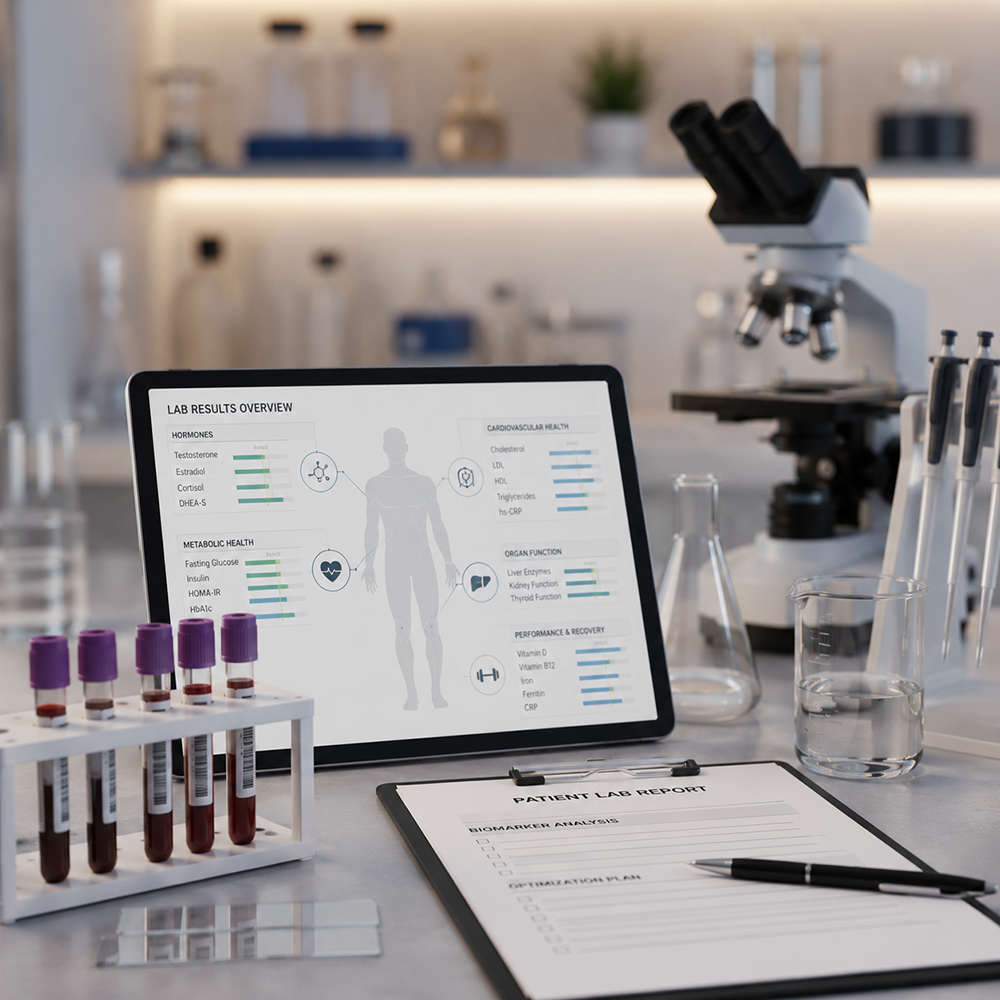
A strong men’s hormone optimization plan should not rely on one testosterone number. Bloodwork helps create a more complete picture of hormone status, availability, safety, and related health factors.
Important markers may include:
- Total Testosterone
- Free Testosterone
- SHBG
- Estradiol
- Hematocrit
- Liver Enzymes
- PSA when appropriate
- Additional metabolic or thyroid markers when needed
Total Testosterone
Total Testosterone measures the overall amount of testosterone in the blood. This includes testosterone that is bound to proteins and testosterone that is more available for use.
Total Testosterone is often the starting point because it helps establish whether testosterone may be low. But it should not be the only marker reviewed.
A provider may use Total Testosterone to help evaluate:
- Baseline hormone status
- Possible testosterone deficiency
- Treatment eligibility
- Progress over time if therapy is prescribed
- Whether repeat testing is needed
Because testosterone can fluctuate, a single test may not be enough. The Endocrine Society patient guidance states that diagnosis of hypogonadism requires signs or symptoms plus at least two early morning blood tests showing low testosterone.
Free Testosterone
Free Testosterone measures testosterone that is not tightly bound to proteins in the blood. This matters because free testosterone is more available for the body to use.
A man may have total testosterone that appears acceptable, but his free testosterone may still be lower than expected. This can happen when binding proteins affect hormone availability.
Free Testosterone can help provide context for symptoms such as:
- Low libido
- Low energy
- Poor recovery
- Reduced strength
- Brain fog
- Lower motivation
- Performance changes
This is why Gatlan’s approach considers more than a single number. Hormone optimization is not about checking one box. It is about understanding how hormones are functioning in real life.
SHBG
SHBG, or Sex Hormone-Binding Globulin, is a protein that binds to testosterone and other sex hormones. It affects how much testosterone is available for the body to use.
If SHBG is high, more testosterone may be bound and less may be available as free testosterone. If SHBG is low, hormone availability may shift in a different way.
SHBG can help explain why two men with similar total testosterone levels may feel different.
Testing SHBG may help evaluate:
- Testosterone availability
- Free testosterone interpretation
- Hormone balance
- Why symptoms may not match total testosterone
- How the body is transporting hormones
Estradiol
Estradiol is a form of estrogen. Men need estradiol too. It plays a role in libido, mood, bone health, sexual function, and overall hormone balance.
The goal is not to eliminate estradiol. The goal is balance.
Estradiol may be especially important during TRT because some testosterone can convert into estrogen. If estradiol is out of balance, some men may notice changes in mood, libido, water retention, breast tenderness, or overall comfort.
Hematocrit
Hematocrit measures the percentage of red blood cells in the blood. This is one of the most important safety markers before and during testosterone therapy.
Testosterone therapy can increase red blood cell production, and patients taking testosterone replacement should have medical checkups and blood tests several times during the first year and yearly after that.
Hematocrit can help providers evaluate:
- Red blood cell levels
- Blood thickness
- Oxygen-carrying capacity
- Treatment safety
- Whether a dose adjustment may be needed
Liver Enzymes
Liver Enzymes help evaluate liver function. The liver plays a role in hormone metabolism, medication processing, detoxification, and overall metabolic health.
Liver enzyme testing may help provide a baseline before treatment and may be especially relevant when discussing oral medication options or broader wellness care.
PSA When Appropriate
PSA, or Prostate-Specific Antigen, is a prostate-related marker that may be reviewed depending on age, health history, symptoms, and provider judgment.
The Endocrine Society recommends against starting testosterone therapy in men with certain prostate-related risk factors without further evaluation and emphasizes risk assessment and monitoring when appropriate.
Not every patient needs the exact same testing plan. That is why provider review is important.
When Should Men Consider Testing Testosterone?
Men may want to consider hormone testing when symptoms are persistent, noticeable, or affecting quality of life.
Testing may be especially helpful if symptoms include several of the following:
- Low libido
- Low energy
- Erectile changes
- Loss of strength
- Poor recovery
- Difficulty building muscle
- Increased body fat
- Mood changes
- Brain fog
- Lower motivation
- Feeling less like yourself
Testing can also be helpful when a man is over 40 and noticing changes that do not improve with lifestyle changes. It may also be useful for men who are training consistently but not recovering well, struggling with weight changes, or wanting a more proactive health optimization plan.
The goal is not to test randomly. The goal is to test with a purpose.
What Testosterone Treatment Options Exist?
If a man has symptoms consistent with low testosterone and lab testing confirms consistently low levels, testosterone replacement therapy may be considered. TRT should always be discussed with a licensed medical provider because it may not be appropriate for every patient.
For qualified patients, Gatlan offers testosterone therapy options such as Kyzatrex Oral Testosterone Pills and Testosterone Compounded Injection when prescribed.
Kyzatrex Oral Testosterone Pills
Kyzatrex Oral Testosterone Pills may be a fit for qualified patients who prefer a needle-free testosterone option. This can appeal to men who want a convenient routine and would rather avoid injections when appropriate.
This option may be relevant for men focused on:
- Energy
- Libido
- Drive
- Hormone optimization
- Daily consistency
- A needle-free treatment routine
Testosterone Compounded Injection
Testosterone Compounded Injection may be appropriate for qualified patients who prefer or are better suited for injectable testosterone. Injectable TRT is a traditional testosterone replacement option and may support goals related to hormone optimization when prescribed and monitored properly.
This option may be relevant for men focused on:
- Energy
- Strength
- Recovery
- Libido
- Performance
- Long-term hormone support
The right option depends on the patient’s symptoms, labs, health history, preferences, and provider recommendation.
What TRT Can and Cannot Do
TRT may help qualified men with testosterone deficiency improve symptoms related to low testosterone. That may include libido, energy, mood, muscle mass, or bone density in appropriately diagnosed patients.
But TRT is not a cure-all.
TRT should not be viewed as:
- A shortcut for fitness
- A replacement for sleep
- A replacement for nutrition
- A guaranteed libido fix
- A weight loss medication
- A one-size-fits-all performance enhancer
- A treatment to start without bloodwork
A responsible approach to TRT focuses on restoring appropriate testosterone levels in men who are truly deficient, not pushing hormones as high as possible.
This is why Gatlan’s provider-guided model matters. Patients are evaluated through symptoms, labs, goals, health history, and ongoing monitoring.
Lifestyle Factors That Support Hormone Health
Hormone optimization should not ignore the basics. Even when testosterone therapy is appropriate, lifestyle still matters.
Men can support hormone health by focusing on:
- Sleep: Poor sleep can affect energy, appetite, recovery, mood, and hormone health.
- Strength training: Resistance training supports muscle, strength, metabolism, and long-term performance.
- Protein intake: Adequate protein helps support muscle repair, body composition, and recovery.
- Healthy fats: Balanced nutrition supports hormone production and metabolic health.
- Stress management: Chronic stress can affect sleep, libido, motivation, and overall health.
- Weight management: Body composition can influence hormones, energy, and metabolic function.
- Alcohol moderation: Heavy alcohol use can affect sleep, recovery, metabolism, and sexual health.
- Consistent movement: Daily movement supports cardiovascular health, mood, and body composition.
These habits are not exciting shortcuts, but they are foundational. Gatlan’s hormone optimization process can work alongside these habits, not replace them.
How Medical Weight Loss Can Fit Into Men’s Hormone Optimization
For many men, hormones and metabolism are connected. A man may be dealing with low energy, stubborn weight, poor recovery, low motivation, and changes in body composition at the same time.
Sometimes testosterone is part of that picture. Sometimes metabolic health is the larger issue. Sometimes both deserve review.
Gatlan’s men’s treatment path includes medical weight loss, described around metabolic health and advanced incretin mimetics for sustainable weight management.
Medical weight loss may be worth discussing when a man is focused on:
- Stubborn weight
- Appetite control
- Body composition
- Metabolic health
- Long-term weight management
- More structure and support
For some men, hormone optimization may support energy, recovery, and muscle maintenance. Medical weight loss may support appetite, weight, and metabolic health. A provider-guided approach can help determine which path makes the most sense.
How Longevity Medicine Fits Into Men’s Hormone Optimization
Hormone optimization is often part of a bigger longevity conversation. Men are not only trying to fix one symptom. They want to age better, stay strong, recover well, think clearly, and remain active for the long term.
Gatlan’s longevity page focuses on helping patients stay sharp, strong, and energized, and lists options such as Rapamycin, Low-Dose Naltrexone, NAD+, and Sermorelin as part of its longevity category.
For men, longevity care may include support for:
- Cellular health
- Recovery
- Inflammation balance
- Metabolic function
- Energy production
- Sleep and recovery
- Performance
- Long-term vitality
Hormone optimization, longevity medicine, and metabolic health are connected because they all influence how a man feels, performs, and ages. Gatlan’s broader care model allows these areas to be reviewed together when appropriate.
Why Ongoing Monitoring Matters
Hormone optimization is not a one-time event. A man’s body can change over time, and treatment may need to be reviewed or adjusted.
Monitoring can help evaluate:
- Symptom improvement
- Testosterone levels
- Free testosterone
- Estradiol balance
- Hematocrit
- Liver markers
- PSA when appropriate
- Side effects
- Dose timing
- Treatment response
Mayo Clinic notes that people taking testosterone replacement should have medical checkups and blood tests several times during the first year and yearly after that.
This is especially important because feeling better does not always mean every marker is where it should be. Ongoing support helps make hormone optimization safer, more personalized, and more responsive to the patient’s goals.

What Makes Gatlan’s Approach Different?
Gatlan’s men’s health model is built around personalized, provider-guided care. The public site describes the men’s path as built for performance, recovery, and longevity, with clinical intake and labs, physician-guided protocols, and concierge delivery and monitoring.
The Gatlan process may include:
Online medical intake to understand symptoms, health history, goals, and concerns.
Blood testing when appropriate to evaluate biomarkers instead of guessing.
Provider evaluation to determine whether testosterone, metabolic health, longevity support, or another factor may be involved.
Personalized treatment planning based on labs, symptoms, preferences, and goals.
Ongoing support and adjustments so the plan can evolve over time.
Gatlan’s broader site positions care around hormones, metabolism, and longevity with science-backed protocols designed for high-performers.
For qualified patients, Gatlan may offer:
- Kyzatrex Oral Testosterone Pills
- Testosterone Compounded Injection
- Medical Weight Loss
- Longevity Protocols
- Blood Test Kit
- Glutathione
- Pre-Workout Rx
The goal is to give men a smarter starting point and a more supported path forward.
Frequently Asked Questions
What is men’s hormone optimization?
Men’s hormone optimization is the process of evaluating symptoms, bloodwork, health history, and goals to better understand hormone health and build a personalized plan. It may include testosterone testing, related biomarker review, lifestyle support, and treatment options when appropriate.
Is hormone optimization the same as TRT?
No. TRT is one possible treatment within hormone optimization. Hormone optimization is broader and may include blood testing, provider review, lifestyle changes, metabolic health support, longevity medicine, and ongoing monitoring.
What are signs that a man should test testosterone?
Men may consider testing testosterone if they have persistent low libido, low energy, reduced strength, poor recovery, brain fog, mood changes, increased body fat, or difficulty building muscle. Symptoms alone are not enough for diagnosis, so bloodwork and provider review matter.
What blood tests are important for men’s hormone optimization?
Important markers may include Total Testosterone, Free Testosterone, SHBG, Estradiol, Hematocrit, Liver Enzymes, and PSA when appropriate. Some men may also benefit from thyroid, metabolic, cholesterol, blood sugar, or nutrient-related testing.
Does every man with low testosterone need TRT?
No. TRT may be considered for qualified men with symptoms and consistently low testosterone levels, but it is not right for everyone. Some men may need lifestyle changes, metabolic health support, medication review, or additional evaluation instead.
What TRT options does Gatlan offer?
For qualified patients, Gatlan may offer Kyzatrex Oral Testosterone Pills or Testosterone Compounded Injection when prescribed. A provider can help determine which option may fit the patient’s labs, symptoms, health history, goals, and preferences.
Can hormone optimization help with libido?
If low libido is related to low testosterone, hormone optimization may help qualified patients. However, libido can also be affected by stress, sleep, medications, relationship factors, alcohol use, mental health, and metabolic health.
Can hormone optimization help with weight loss?
Hormone optimization may support body composition in some men, especially when low testosterone affects energy, recovery, and muscle maintenance. However, TRT is not a direct weight loss medication. Gatlan also offers Medical Weight Loss options for qualified patients when weight management is a central goal.
How often should men monitor testosterone if they are on TRT?
Monitoring frequency depends on the patient and provider’s plan. Mayo Clinic notes that patients taking testosterone replacement should have medical checkups and blood tests several times during the first year and yearly after that.
How do I know where to start with Gatlan?
The best place to start is with a consultation. Gatlan can review your symptoms, goals, health history, and biomarkers to help determine whether hormone optimization, medical weight loss, longevity support, or another option may be appropriate.
Conclusion: Better Hormone Health Starts With Better Clarity
Men’s hormone optimization is not about chasing a number or assuming testosterone is the answer to every symptom. It is about understanding the full picture: energy, libido, strength, recovery, mood, body composition, metabolic health, bloodwork, and long-term vitality.
For some men, low testosterone may be part of the issue. For others, symptoms may be connected to sleep, stress, medications, metabolic health, thyroid function, or lifestyle factors. The right answer starts with testing, provider review, and a personalized plan.
At Gatlan, we help men take a smarter approach to hormone optimization through online intake, blood testing when appropriate, provider evaluation, and treatment options such as Kyzatrex Oral Testosterone Pills or Testosterone Compounded Injection when prescribed. Gatlan can also help qualified patients explore related services such as Medical Weight Loss, Longevity Protocols, Glutathione, Pre-Workout Rx, and Blood Test Kit support depending on their goals.
If you are ready to stop guessing and start understanding what your body is showing, Gatlan can help you take the next step.
Schedule your free consultation today and begin your personalized path toward better energy, stronger performance, improved recovery, and long-term men’s health optimization.